Turn Scattered Data Into
Operational Intelligence
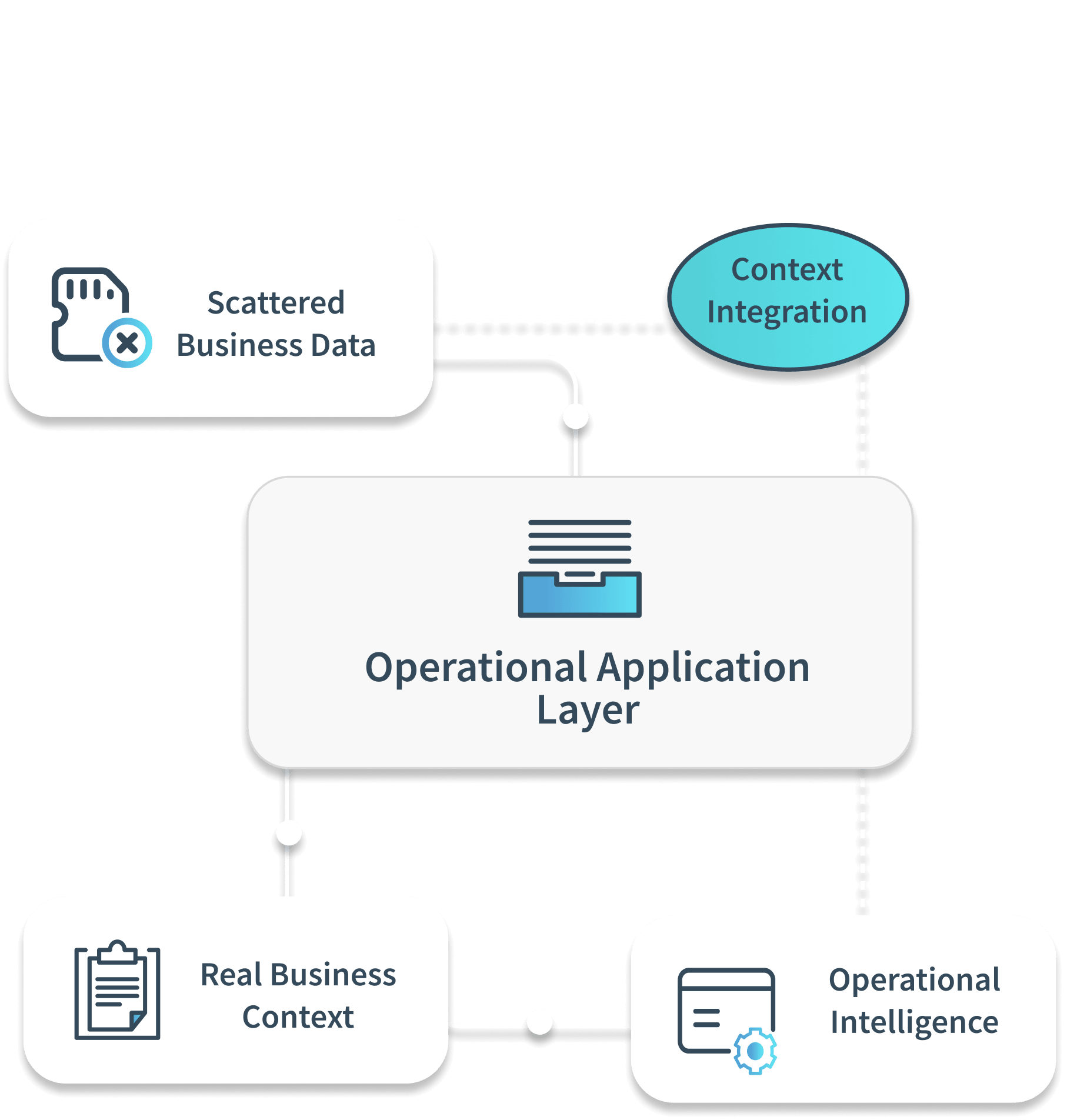
CloudOffix transforms scattered operational data into a secure
application layer where teams, workflows, and AI operate with real business context.
When Data Works Together
Your Data Doesn't Stay Scattered.
It Starts Powering Your Operations.
Business data is often created across specialized tools — CRM platforms, project management systems, support software, and marketing applications. Because each solution focuses on its own function, important operational context remains separated.
CloudOffix brings this data together inside a unified application layer where information from different systems can interact and support workflows, teams, and AI.

The Limits of Data Consolidation

1. Fragmented Operational Context
Even when data from different systems is consolidated, it often remains disconnected from the workflows where work actually happens. Without operational context, teams struggle to translate information into meaningful insights or actions.

2. Point Solutions Create Boundaries
Many business tools are designed to support a single function such as projects, tickets, or customer records. This structure keeps data confined within individual systems instead of allowing it to contribute to broader business operations.
3. Warehouses Store Data, Not Operations
In many data warehouse environments, access to insights is limited to analysts, managers, or executives who can query and interpret the data. Without built-in security controls and role-based access, data cannot be safely shared across teams or embedded into operational workflows, limiting its impact on daily productivity.

4. AI Needs Operational Context
AI systems can analyze datasets, but their effectiveness depends on understanding how the business actually operates. When data is separated from workflows and user roles, AI insights remain limited and disconnected from real decisions.
Data warehouses can consolidate information, but they do not define how data should be used in daily operations.
Organizations still need to determine who can access what and how information flows through real workflows.
An operational application layer introduces the security, roles, and structure needed to make data truly usable.
The Operational Application Layer
CloudOffix acts as an operational application layer where data from different systems works together within real business processes. Instead of simply storing information, teams, workflows, and automation operate directly on connected data.
By combining operational logic, role based security, and workflow context, data becomes usable across the entire organization. Teams can collaborate, automate processes, and generate insights within the same environment.

Security That Enables Intelligence

Role Based Access
Every user interacts with data according to their role and permissions within the organization. Managers, employees, partners, and customers only see the information relevant to their responsibilities.

Secure AI and Automation
AI assistants and automated workflows operate within the same permission structure as users. This ensures that intelligence and automation always respect data security and organizational boundaries.

Operational Productivity
Because users access the right information directly within workflows, teams spend less time searching for data across different systems. This allows employees to focus on execution instead of navigating tools.
How Intelligence Moves Through the Platform
Five steps from user request to operational outcome.
User Request
A user, AI assistant, or workflow initiates a request by asking a question or triggering an action within the platform. This interaction starts the process of retrieving and using operational data.
Access Verification
The platform evaluates user roles and permissions to determine which information can be accessed. This ensures that every request respects security rules and organizational boundaries.
Context Retrieval
Relevant data is gathered from connected systems through the application layer. Because the data remains linked to workflows and operational context, it can be understood and used more effectively.
AI Processing
AI assistants analyze the available information and interpret it within the operational context. This allows the platform to generate insights, suggestions, or automated responses.
Workflow Execution
The resulting insights or actions are applied directly within workflows. Teams can immediately act on the information without leaving the operational environment.
Business Impact

Operational Visibility
Teams gain a clear view of operational data across systems and workflows. This helps organizations understand what is happening in real time and respond faster.

Faster Decision Making
Access to connected operational data allows teams to make decisions without waiting for reports or manual analysis. Information becomes available exactly where work happens.

AI Driven Insights
AI can analyze operational data within its real business context. This enables more relevant insights and smarter recommendations.

Improved Productivity
Teams spend less time searching for information across multiple tools. Workflows become more efficient because data is available where it is needed.

Secure Collaboration
Role based access ensures that every user interacts with the right data. This allows teams, partners, and customers to collaborate without compromising security.

Scalable Operations
As organizations grow, the platform continues to support larger teams, workflows, and automation. Connected data and operational logic make scaling far easier.
Where Business Data Works
Business data already exists across many systems, but real value appears when it becomes part of daily operations. When information flows through an operational application layer, teams, workflows, and AI can work with real business context.
CloudOffix brings scattered data into a secure environment where insights, automation, and collaboration happen in one place. Instead of simply collecting information, the platform enables organizations to use data directly in their operations.