
Platform
Industries
Journeys
Resources
Partners
Company

Pay for who's online, not for every account.
CloudOffix is the first and only cloud vendor that offers concurrent licensing together with per-user licensing, so occasional users can take part without a seat each.
What is a concurrent (floating) license?
A concurrent license is based on the number of users accessing a system at the same time. You can create unlimited user accounts, but only a set number can be logged in simultaneously.
With a ten-user concurrent license, the eleventh user waits until one of the first ten logs out. It is a flexible, efficient model for SaaS software.
Flexibility and cost savings
Flexible
Access from anywhere, anytime, and transfer access easily.
Cost-efficient
Pay only for licenses in use and save on occasional access.
Optimal usage
Set concurrent access levels and avoid disruptions to day-to-day work.
Unlimited accounts
Open as many accounts as you need, on multiple devices.
How the models compare
What is a named user license?
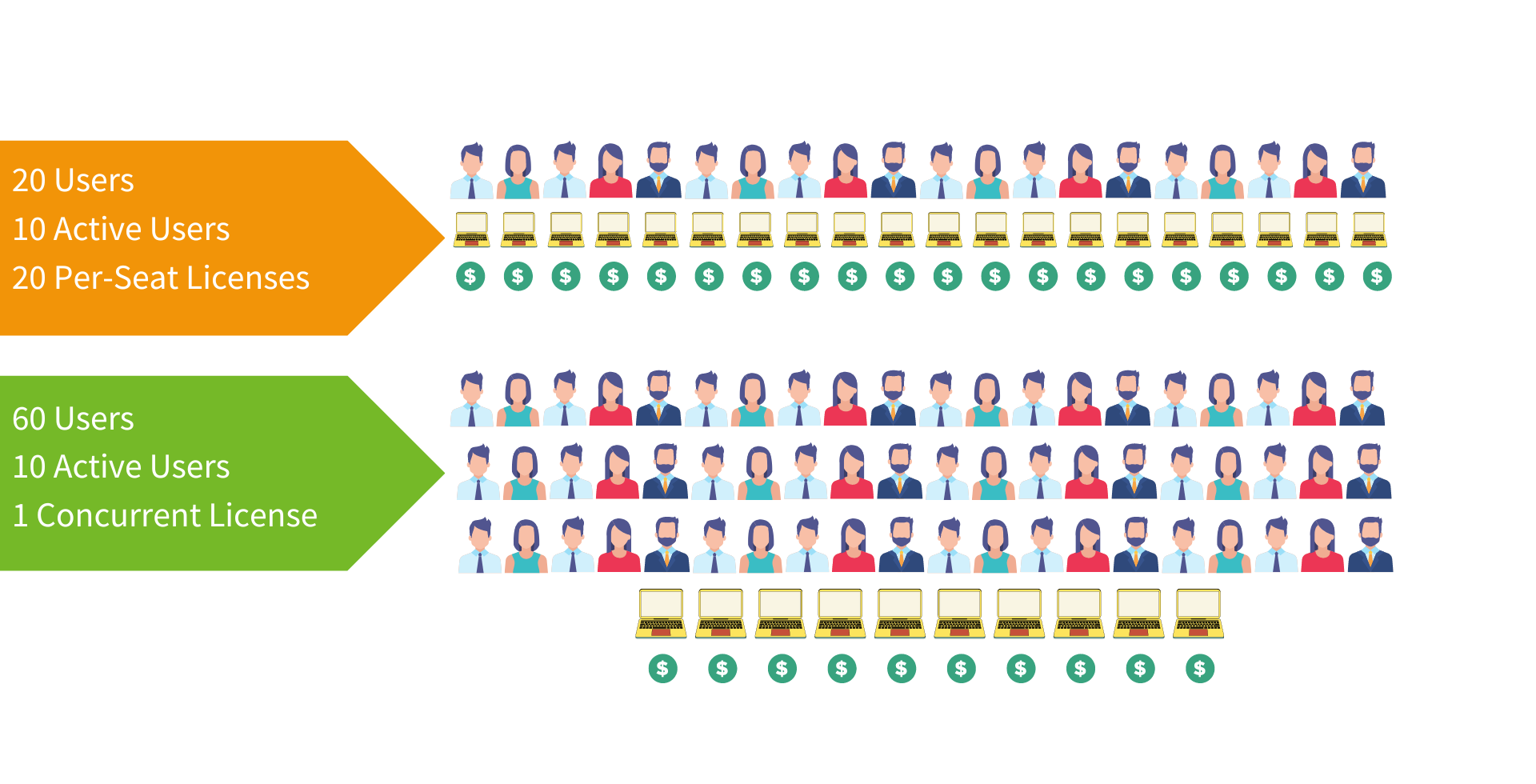
Most cloud software is sold per named user, or per seat: you pay for every person who will use the service. If 1,000 people need occasional access, you buy 1,000 licenses, even if only a fraction log in each day.
How does concurrent licensing change that?
You buy only the number of licenses used at the same time, create as many accounts as you need and raise the concurrent count as simultaneous usage grows. Concurrent licenses cost more per license than named ones, but for organizations with hundreds or thousands of users they are far more cost-effective over time.
Half the licenses, the same coverage
Say 20 employees need a software tool. At $500 per named license, that is $10,000.
If no more than 10 use it at the same time, 10 concurrent licenses cover everyone: $5,000, a saving of $5,000.
Put licensing on your terms.
Start a free trial, or book a demo to plan the right mix of concurrent and per-user licenses for your teams.